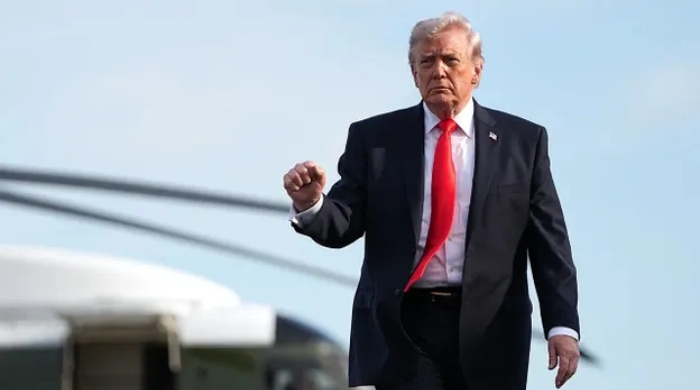
U.S. President Donald Trump announced a landmark trade agreement with Indian Prime Minister Narendra Modi, under which Washington will reduce tariffs on Indian exports to 18 %, a significant drop from previous punitive rates.
The deal was unveiled after a phone call between the two leaders and is being positioned as a boost to trade ties, investment flows, and strategic economic cooperation between the world’s two largest democracies.
Major Changes in the Tariff Regime
The United States had earlier slapped steep tariffs on Indian imports, up to 50%, as part of trade tensions linked to India’s prior oil purchases from Russia. Under the new agreement, the reciprocal tariff will be slashed to 18 %, easing a major trade barrier for Indian exporters.
According to the announcement, Washington has also agreed to lift the punitive tariff imposed on New Delhi for continuing to buy Russian oil, a central point of disagreement over the past year.
India’s Commitments and Economic Impact
As part of the pact, India has agreed to reduce trade barriers for U.S. goods, including energy, technology, and agricultural products. Officials noted that India could purchase more than $500 billion worth of American products, spanning energy, pharmaceuticals, and defense sectors, strengthening the commercial relationship.
India’s stock markets responded positively, with major indices and equities rallying on the news. The Indian rupee also gained ground against the U.S. dollar as investors welcomed the clarity on trade policy.
Reactions from Both Sides
President Trump hailed the deal as a major achievement that would expand U.S. exports and support American jobs:
“This trade agreement will deepen our economic partnership and create opportunities for industries on both sides.”
Prime Minister Modi expressed his appreciation on social media, noting that reduced tariffs would benefit Indian exporters and strengthen economic ties.
Strategic and Global Implications
Experts say the agreement marks a turning point in U.S.–India trade relations, following months of tensions over tariff policy and geopolitical disagreements tied to energy imports. While full details and timelines for implementation remain pending, the deal is expected to smooth trade friction and encourage further negotiations on broader market access.
Analysts also point out that this pact could reshape trade dynamics in South Asia, given its implications for supply chains and regional competitive positioning